Fewer repetitive steps. More room for work that matters.
We design automation and artificial intelligence integrations around a specific process. We first understand where manual work is concentrated, then assess which solution makes sense to introduce.
Which task is repeated, using which data and with what exceptions? Clarifying these elements helps distinguish steps that can follow defined rules from those requiring interpretation or a human decision. This is also how we assess whether AI is appropriate.
Connected steps
Information and operations can be linked in a designed workflow, reducing the need to copy data manually.
Explicit controls
We define where data is checked, how exceptions are flagged and who needs to intervene.
A measurable starting point
We choose a limited task and assessment criteria before extending automation to other processes.
POSSIBLE APPLICATIONS
Where it can make a difference.
Each scenario is assessed against your project’s needs and constraints.
Recurring data processing
Recurring procedures to collect, transform and organise data, as documented in the IDM project.
Connections between tools
Exchange information between business systems after assessing access and integration options.
AI-assisted tasks
Classification or preparation of content and information, assessed using representative data and human review where needed.
THE SCOPE
What we build together.
These activities form the basis of the proposal. Features, materials and responsibilities are defined for each project.
01 / Process mapping
Tasks, frequency, input data, exceptions and responsibilities.
02 / Solution assessment
Compare deterministic rules, integrations and AI against the problem to be solved.
03 / Trial and evaluation
Test representative cases, with acceptance criteria and explicit limitations.
04 / Operational integration
Introduce the solution into the agreed workflow, with error handling and instructions for users.
OUR APPROACH
From context to a concrete project.
01
We listen
We identify a repetitive step and map how it is currently handled.
02
We plan
We define data, rules, controls and situations requiring a person.
03
We develop
We build and test the workflow against typical cases and exceptions.
04
We launch
We agree on a gradual introduction and how its operation will be monitored.
PROJECT CHOICES
Data and constraints first. Tools second.
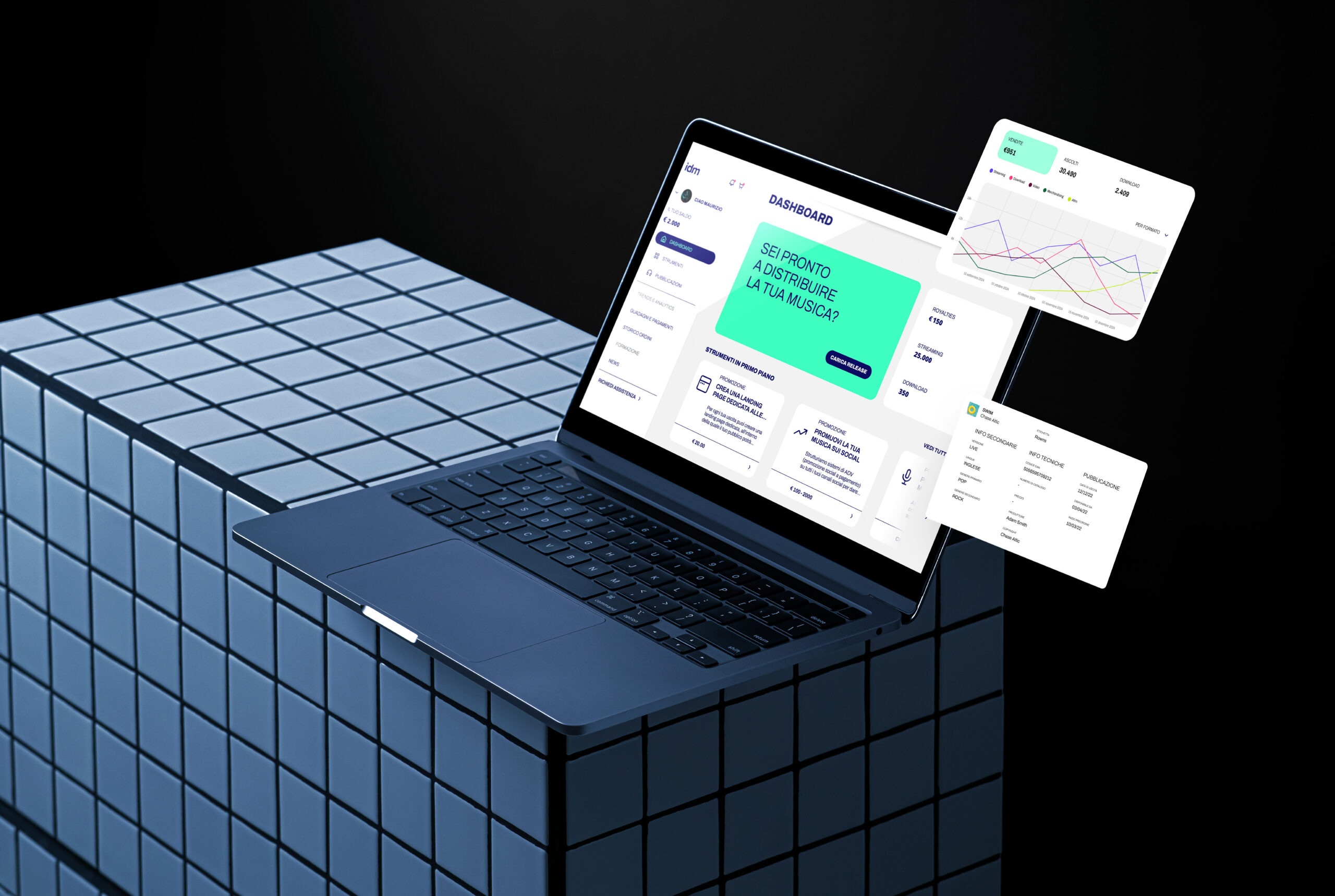
For IDM, we built automated royalty data procedures within a platform using a Node.js and Express backend and REST APIs. For AI integrations, tools and providers are defined after assessing requirements, data and conditions of use.
FROM OUR PORTFOLIO
Our work, in context.
IDM Music Startup
Applications for artists and staff, backend services and automated royalty data processing. A project to develop and evolve a software platform.
No. Traditional automation may be suitable when a step follows defined rules. We consider AI when the nature of the problem warrants an interpretive component.
We define test cases, expected output quality, exceptions and necessary human interventions. Any savings must be measured in the actual process, rather than presented as a sales promise.
Before choosing a solution, we clarify which data is involved, who can access it and which processing and retention constraints apply. The technical configuration follows this analysis.
LET’S TALK
Which task do you repeat every week?
Describe the process, approximate volumes, tools involved and who currently checks the result. A description is enough for the first discussion; please do not send confidential data.
For the first discussion, share your objective, context, timeline and approximate budget. We will get back to you to explore the project and define the next steps.